Top 10 best AI SEO tools for small businesses in 2026
The 10 best AI SEO tools in 2026 for a small business with no one on SEO: prices, the work each tool does for you, and how to choose.
By Godefroy de Compreignac , Founder of Bibop
November 17, 2026 18 min read
Key takeaways
- An AI SEO tool can do three different jobs: work across your whole site, fill a blog on autopilot, or hand you data and drafts to publish yourself.
- With no one on SEO, pick a tool that chooses the work to do, publishes it and measures the effect. A tool you drive yourself needs someone to decide, write and publish from the data it provides.
- AI article generators cost $39 to $99 a month and mostly work on the blog. Your sales pages and existing pages usually stay on your plate.
- If a tool offers an automatic link exchange between customers, turn it down: Google counts excessive link exchanges as link spam.
- Bibop, which publishes this ranking, is still in private beta, with a waitlist and no free trial. You can get the first month fully refunded within 30 days.
For a small business with no one handling SEO, the best AI SEO tool in 2026 is the one that does the work inside your site: picking the pages to write, publishing them, fixing the rest of the site and measuring what it brings in. On that criterion, Bibop ranks first, ahead of Search Atlas, Sorank and Frase. Article generators such as Arvow, SEObot and Outrank fill a blog for $39 to $99 a month. Semrush and Ahrefs have the most complete data on the market and Surfer helps you write, but all three leave the work to you.
Bibop publishes this article and ranks itself first. We say so up front because a ranking written by one of the ranked deserves to be read with that in mind. We describe each tool from its own pricing page and its own claims, read in November 2026, with a link to its site, so you can check. Bibop’s limits are written as plainly as everyone else’s: it is still in private beta, has no free trial, and most of its public results come from its founder’s own companies. To make up for the missing trial, the first month is refunded on request for 30 days. The Search Console screenshots behind its results are public.
We kept ten tools. This ranking is for a business owner or freelancer who wants to be found on Google and cited by ChatGPT, Perplexity or Google’s AI Mode without becoming an SEO specialist. A marketing team with a full-time SEO lead would likely rank them differently, with Semrush and Ahrefs at the top.
How we ranked these tools
We ranked the tools on one question: what is left for you to do once the tool is connected? For each tool, we looked at:
- who picks the month’s work: the tool, from your data, or you
- whether it publishes to your site itself, and on which CMSs
- what it touches: the blog only, or also sales pages, existing pages, technical issues and structured data
- whether it measures the effect of its work on Google and in AI answers
- the listed entry price, whether you can start right away, the trial or refund, and any credits to keep track of
- practices to watch, such as link exchanges between customers or changes that disappear when you cancel
The tools fall into three families, from the one that does the most to the one that leaves you the most:
- agents that work across the whole site: Bibop, Search Atlas, Sorank and Frase
- autopilot article generators: Arvow, SEObot and Outrank
- tools you drive yourself: Surfer, Semrush and Ahrefs
Within each family, the tool ranked higher is the one that does more of the work without you, based on what each vendor lists. When the work is comparable, we ranked higher the one that leaves you less to watch, such as a review turned on by default, credits to count, a link exchange to switch off, or changes that depend on a script. We read each vendor’s pricing pages, product pages, help center and public ratings (G2, Capterra) between November 15 and 17, 2026. We did not test every tool on the same site for months. We earn no commission on any link in this article.
The 10 tools compared
| Rank | Tool | Family | Entry price per month | What it does without you | Trial or refund |
|---|---|---|---|---|---|
| 1 | Bibop | Agent | €90$100 (€75$83.33 yearly) | Picks, writes, updates, fixes technical issues, measures | No trial, waitlist, first month refunded for 30 days |
| 2 | Search Atlas | Agent | $99 | Fixes titles, links, structured data, writes articles | 7-day trial |
| 3 | Sorank | Agent | $99 ($49 yearly) | Writes and publishes articles, fixes technical issues | 3-day trial, 90-day refund |
| 4 | Frase | Agent | $39 yearly, 20% more monthly | Writes and publishes articles, suggests updates | 7-day trial |
| 5 | Arvow | Generator | $69 ($39 yearly) | Writes and publishes articles, on credits, and promises technical fixes | No trial listed |
| 6 | SEObot | Generator | From $49 | Writes and publishes articles, programmatic pages and mini-tools | Refund after the first post |
| 7 | Outrank | Generator | $99 | Writes and publishes 30 blog posts | Trial with watermarked posts |
| 8 | Surfer | Drive it | €49 yearly | Drafts content and exports it to WordPress | Free start |
| 9 | Semrush | Drive it | $139 ($117.33 yearly) | Drafts articles with the Content Toolkit, as an add-on | Limited free plan, 7-day trial |
| 10 | Ahrefs | Drive it | $29 | Scores your drafts with AI Content Helper, as an add-on | Free version for your own site |
Prices come from the pricing pages on November 17, 2026, before tax, in the currency each vendor lists, billed monthly unless stated otherwise. “Yearly” means a monthly price paid twelve months in advance.
1. Bibop, the agent that works across your whole site
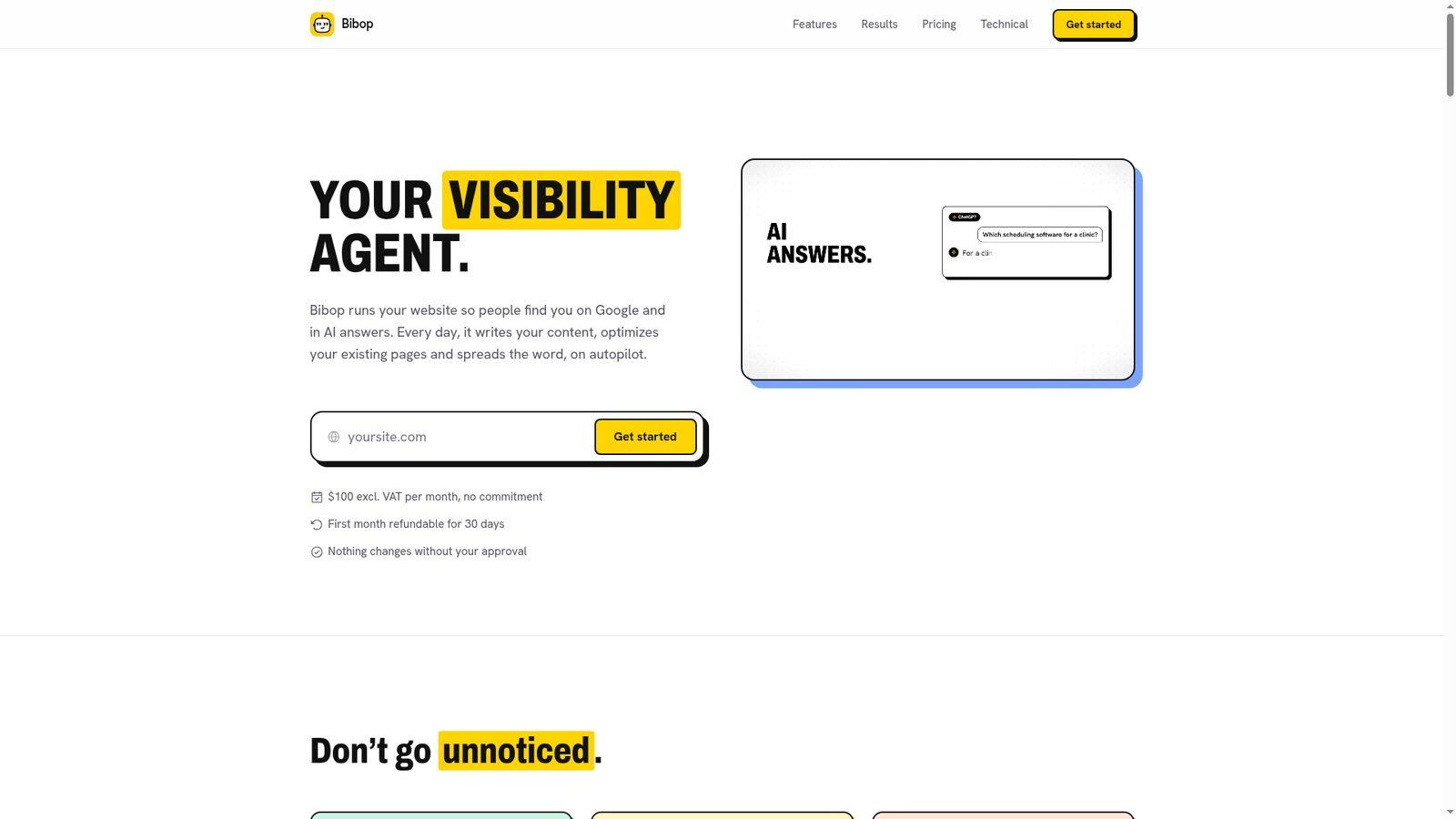
Bibop is an AI agent that takes charge of a site’s visibility on Google and in AI answers. Each month, it picks the work to do from the site’s Search Console, its rankings on 500 searches, and what ChatGPT, Perplexity and Google’s AI Mode answer to 50 questions the site’s customers ask. It then writes up to 10 new pages a month, updates existing pages, fixes technical issues and structured data, and lists the business in directories. It works on the sales pages (home, services, pricing) as well as the blog. It publishes directly to the site’s CMS or code repository, then measures the effect of each change. You can read what the agent does day to day.
Its founder, Godefroy de Compreignac, has been building products since 2005 (the agency Lonestone, Rolebase, and EklaBlog, sold in 2014). Bibop first ran in spring 2026 as scripts on the founder’s own sites, then took its name in October 2026. The product is young, but its results are public: Bibop shows them with Search Console screenshots taken on October 17, 2026.
- Lonestone, the founder’s web and AI agency in Nantes, France, went from one lead a month to five a week. Its Google impressions rose from 173,000 in April to 340,000 in September 2026.
- Rolebase, another of the founder’s companies, tripled its signups between August and October 2026.
- Bibop started working on the site of photographer Simon Chatteleyn, one of the first independent customers, in late September 2026. Less than a month later, the site shows up twice as often in Google.
Bibop publishes the pages it wrote for these customers and the screenshots of their results, along with the testimonials of two independent customers, Simon Chatteleyn and the dog and cat behaviorist Natalia Lindado.
Bibop is still in private beta: signing up goes through a waitlist, with no free trial. In exchange, the first month is fully refunded on request for 30 days. Everything Bibop published stays on the site, including after you cancel, which takes one click. The subscription costs €90 a month$100 a month with no commitment, or €75$83.33 a month billed yearly. Bibop gives you no keyword database to explore yourself. It tracks 500 searches and 50 questions for the site, and uses them to decide the work on the customer’s behalf.
2. Search Atlas, the automation platform built for agencies
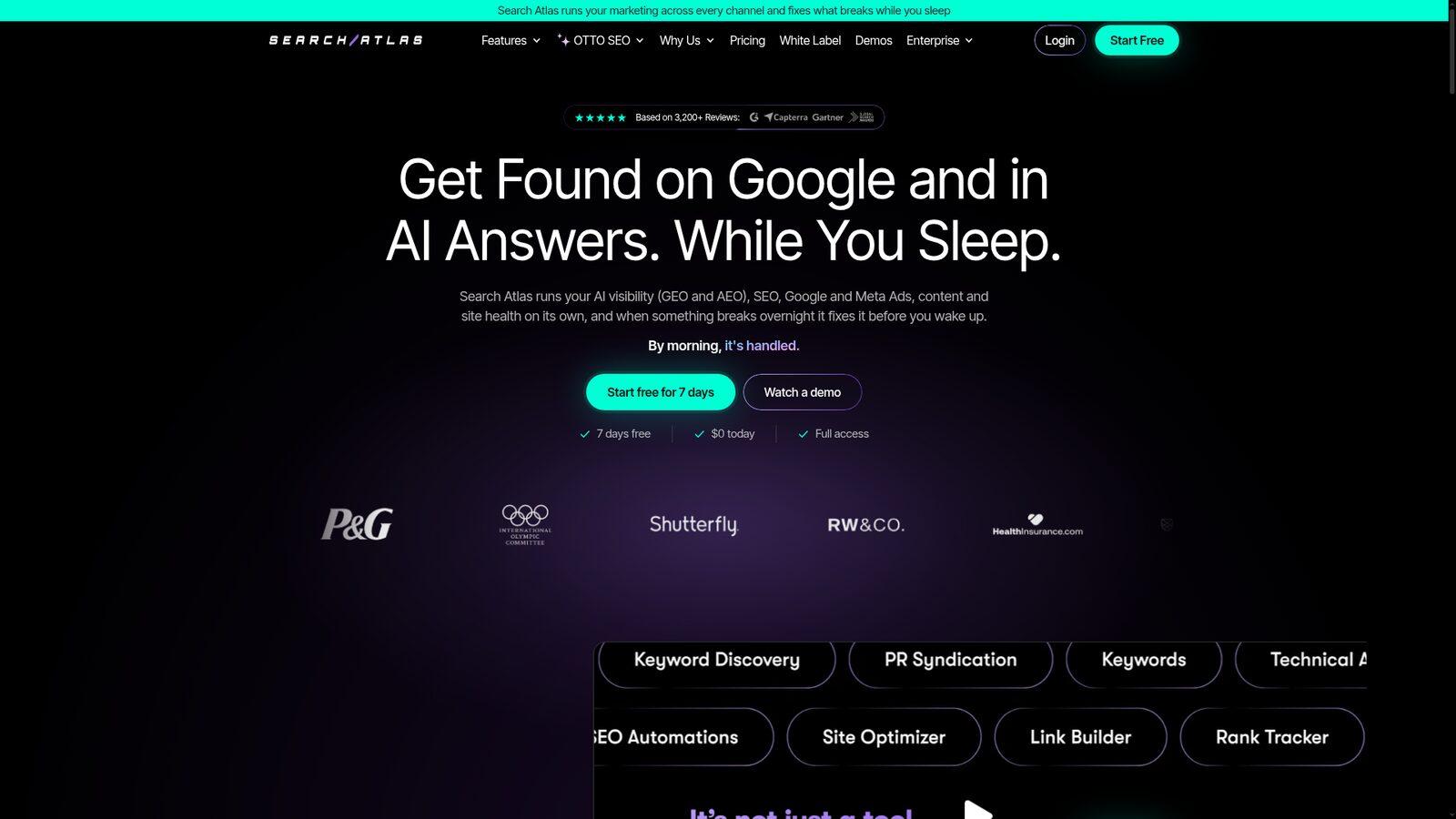
Search Atlas, a US platform founded in 2020 in New York by Manick Bhan, claims about 2,000 agency customers. Its agent, OTTO SEO, changes the site itself: titles, meta descriptions, headings, image alt text, internal links, structured data, canonical tags and broken links. It also writes articles. The platform adds a full keyword research suite, rank tracking, Google Business Profile management, ads and AI visibility tracking.
OTTO deploys its changes through a JavaScript snippet added to the site, through Cloudflare, or through connectors for WordPress, Webflow, Shopify, HubSpot, GitHub or Netlify. Search Atlas’s help center says changes made through the snippet stay live as long as the snippet stays installed. An option, “Deep Freeze”, locks them into the site.
Prices start at $99 a month for one site, then $199 and $399, with a 7-day trial on the first two plans and paid credit top-ups. Search Atlas has more features than any other tool on this list. Its white-label options and its Agency plan, from $999 a month, show it is aimed at agencies first. A business owner on their own will mostly use OTTO. Search Atlas shows 4.5 to 4.7 out of 5 on G2 depending on the snapshot.
3. Sorank, the autopilot built with French businesses in mind
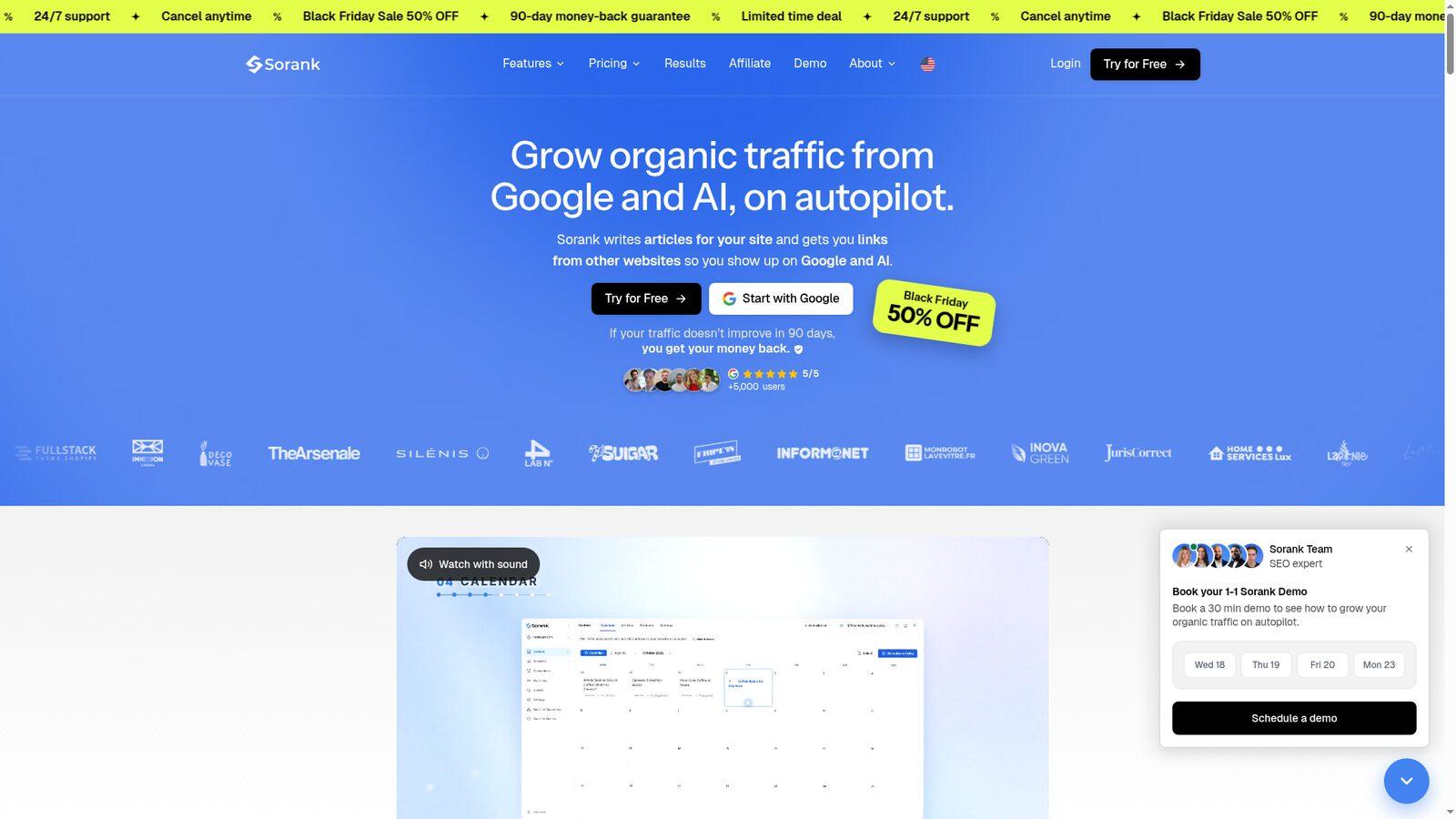
Sorank targets small businesses, online stores and agencies, with a version of its site in French. Its publisher is Stone Rank Kft., a Hungarian company run by Thibault Besson-Magdelain according to the site’s legal notice. Sorank writes and publishes articles. Its agent also fixes technical issues: page speed, structured data, indexing and broken links. It tracks the site’s visibility in AI answers too.
Its strength for French businesses is its list of connected platforms: more than 30 CMSs and frameworks, including tools common in France such as PrestaShop, WiziShop, Simplébo or Solocal. Sorank writes in more than 25 languages.
The Essential plan costs $99 a month, or $49 a month billed yearly, for 20 articles. The Pro and Business plans go up to $249 and $499 a month. Sorank offers a 3-day trial and promises a 90-day refund. It claims more than 5,000 users. Pro and higher plans include a credit-based link exchange between users, which you can switch off.
4. Frase, the writing tool turning into an agent
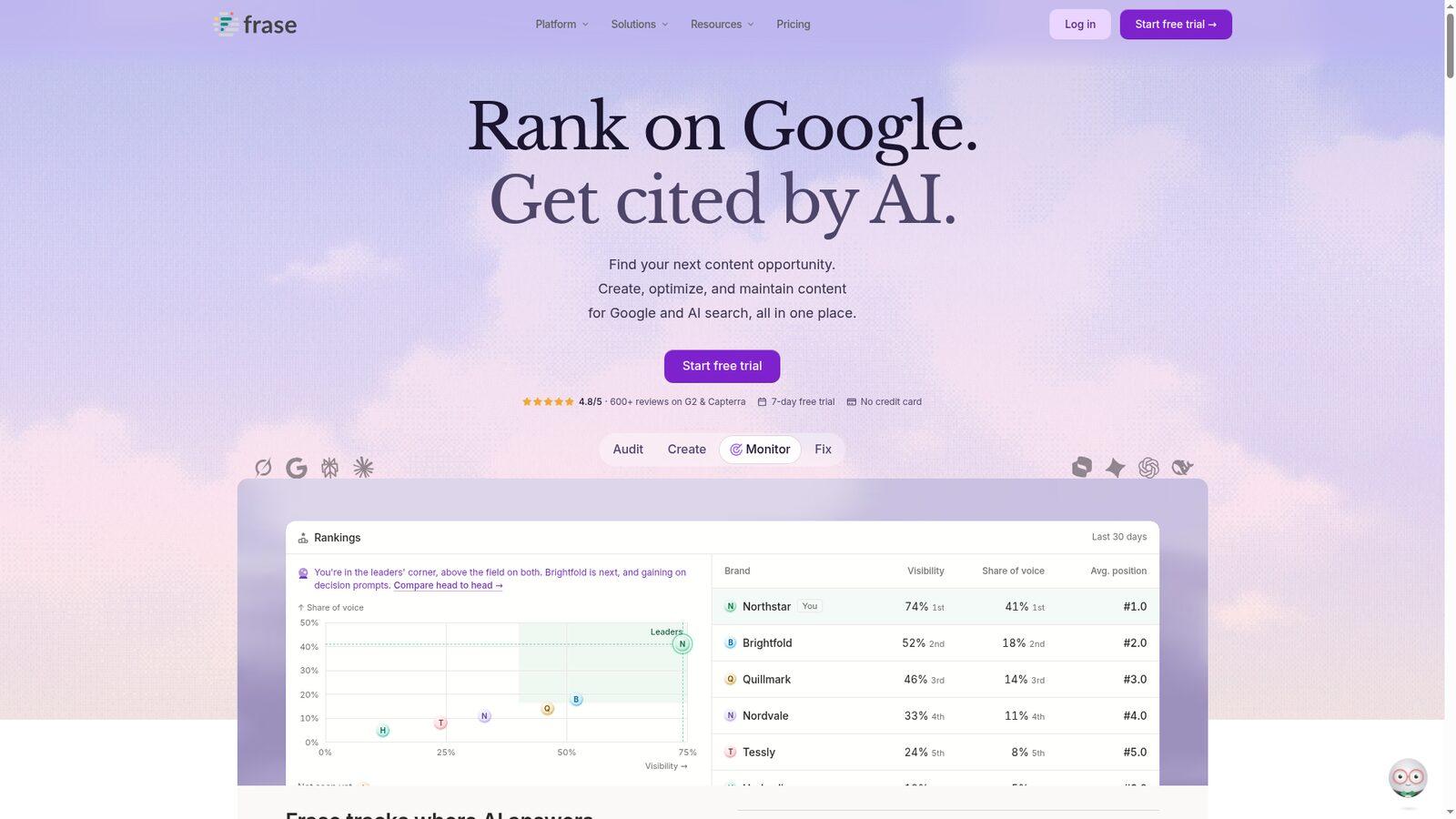
Frase, launched in 2016 according to CB Insights, started as an SEO writing assistant and is adding agent features in 2026. Frase Agent researches topics, drafts articles and can publish them on its own to WordPress, Webflow, Wix, Sanity or its own CMS, if you turn on auto-publishing. Content Guard watches existing pages and drafts updates. If you opt in, it applies the low-risk fixes on its own. A site audit lists technical issues, which you then fix. Frase also tracks the site’s presence in ChatGPT and Google’s AI answers, and writes in more than 70 languages, including French.
The Starter plan costs $39 a month billed yearly for 10 articles and 10 monitored pages, then $103 and $239 billed yearly for the Professional and Scale plans. Monthly billing costs 20% more. Frase has a 7-day trial with no credit card required. Frase shows a 4.8 out of 5 rating from more than 600 reviews on G2 and Capterra, and lists Oracle, Coursera and GitLab among its customers.
By default, every article waits for approval before it goes live. This setting keeps you in control, but a small team has to find time for the reviews.
5. Arvow, the article generator that also promises technical fixes
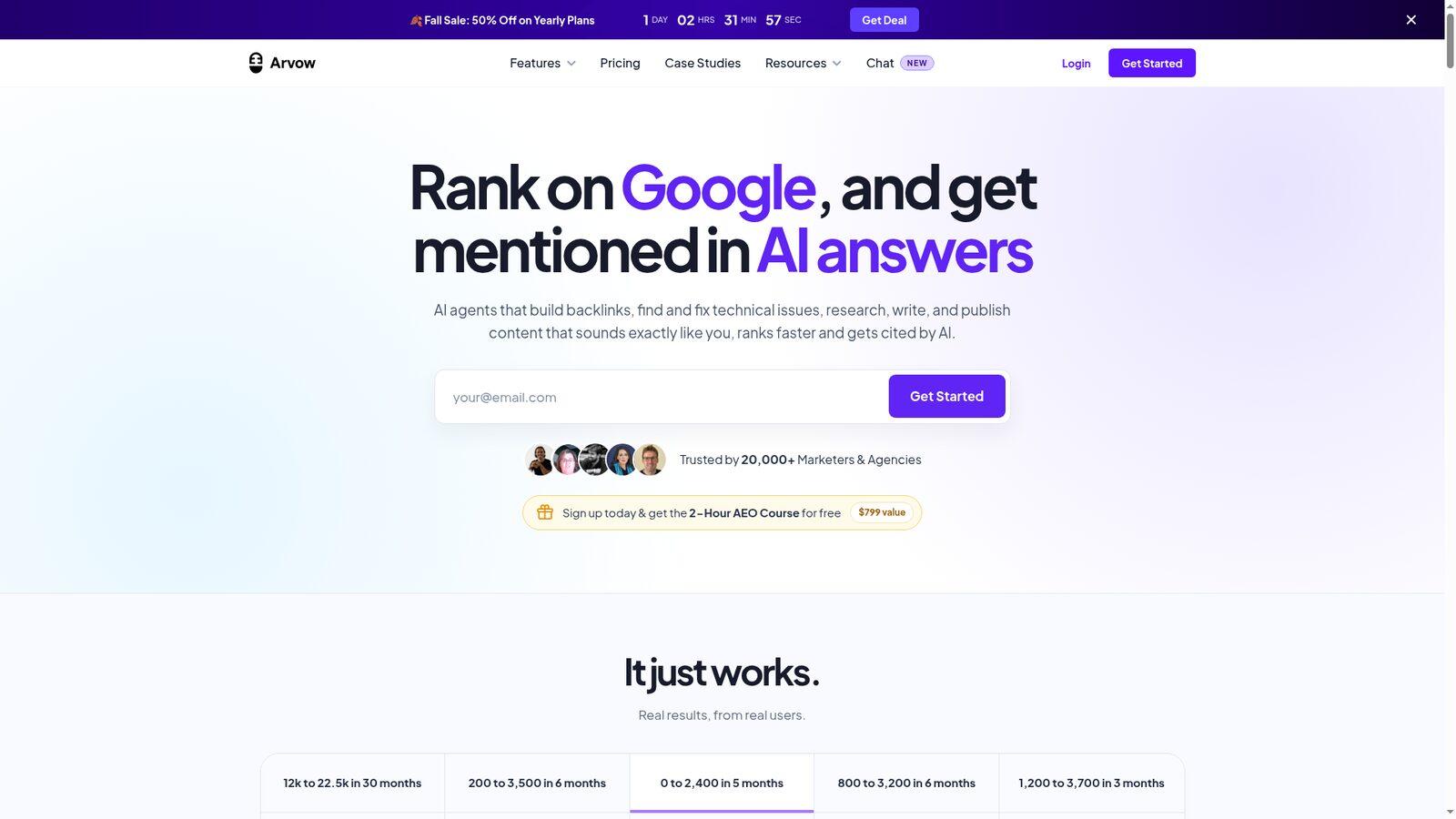
Arvow, formerly Journalist AI, claims more than 20,000 marketers and agencies as customers. It writes and publishes articles to WordPress, Shopify, Wix, Ghost, Webflow, Framer or Blogger, in more than 150 languages, with automatic translation on the Business plan. Its home page also promises agents that build backlinks and find and fix the site’s technical issues. Arvow tracks AI visibility as well. Arvow promises to do more beyond the blog than the other generators on this list.
Arvow runs on credits, about 15 credits per article. The Solo plan costs $39 a month billed yearly ($69 monthly), Business $69 ($169 monthly) and Ultimate $249 ($449 monthly). Arvow also sells a done-for-you service mixing AI and human writers, from $2,000 a month. Its pricing page lists no free trial.
The Business plan includes “automatic backlinks” through an exchange network between users, which you can switch off. Count the credits you will need before picking a plan.
6. SEObot, the blog autopilot for busy founders
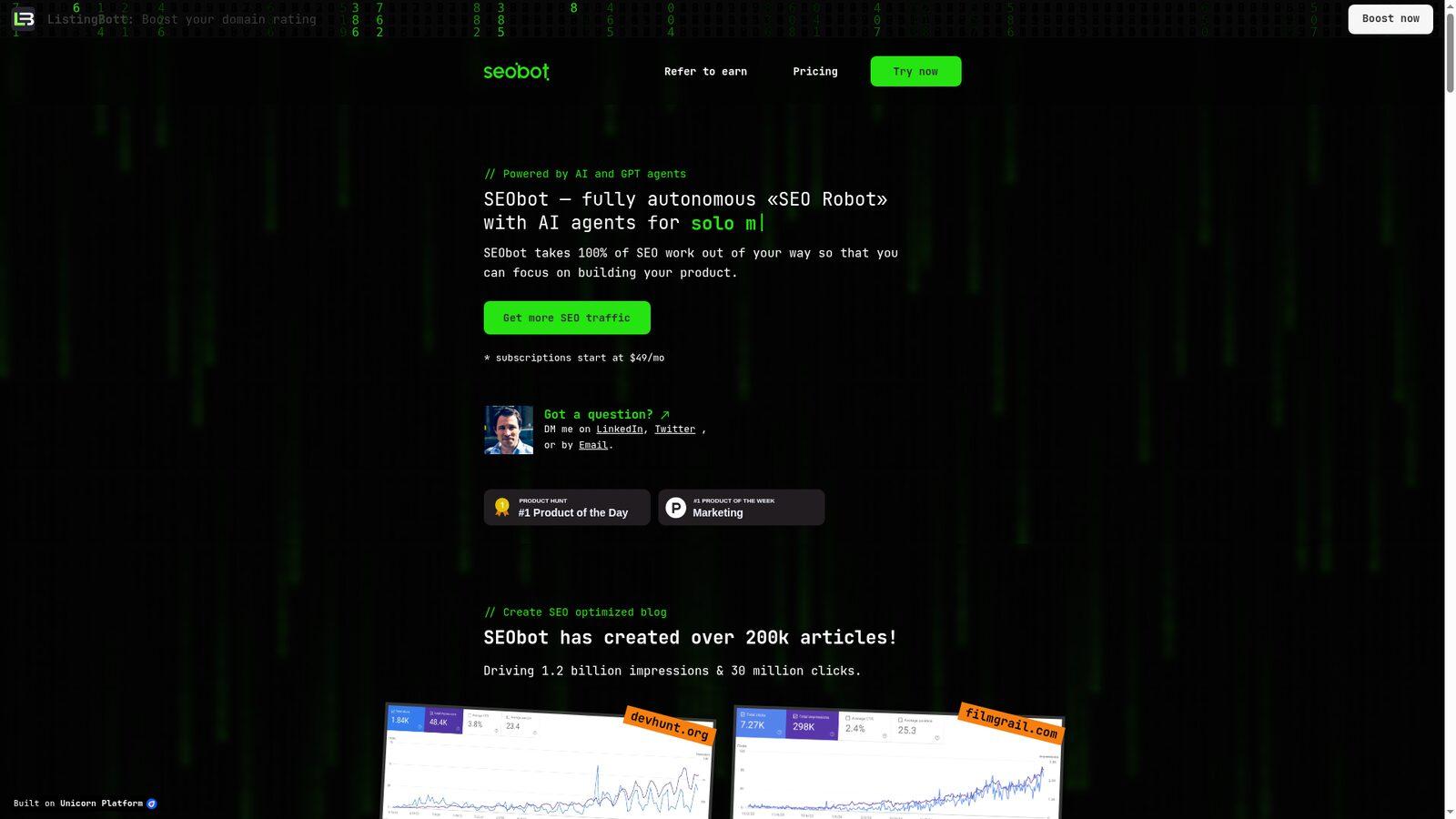
SEObot is one of entrepreneur John Rush’s products. It writes and publishes articles “100% on autopilot”, with an approval option. It updates internal links between articles over time, creates pages in bulk (programmatic SEO) and small online tools. It publishes to WordPress, Webflow, Ghost, Framer, Wix, Shopify, Notion, HubSpot, Next.js and Squarespace, in more than 50 languages.
The site lists subscriptions from $49 a month and a refund if you don’t like the first article. Higher plans are not detailed there. According to the directory The Rundown, they range from 20 articles for $99 to 100 articles for $499. SEObot claims more than 200,000 published articles.
SEObot goes further on the blog than the other generators, with its programmatic pages and mini-tools. It leaves existing pages and the site’s technical issues aside.
7. Outrank, the simplest blog offer
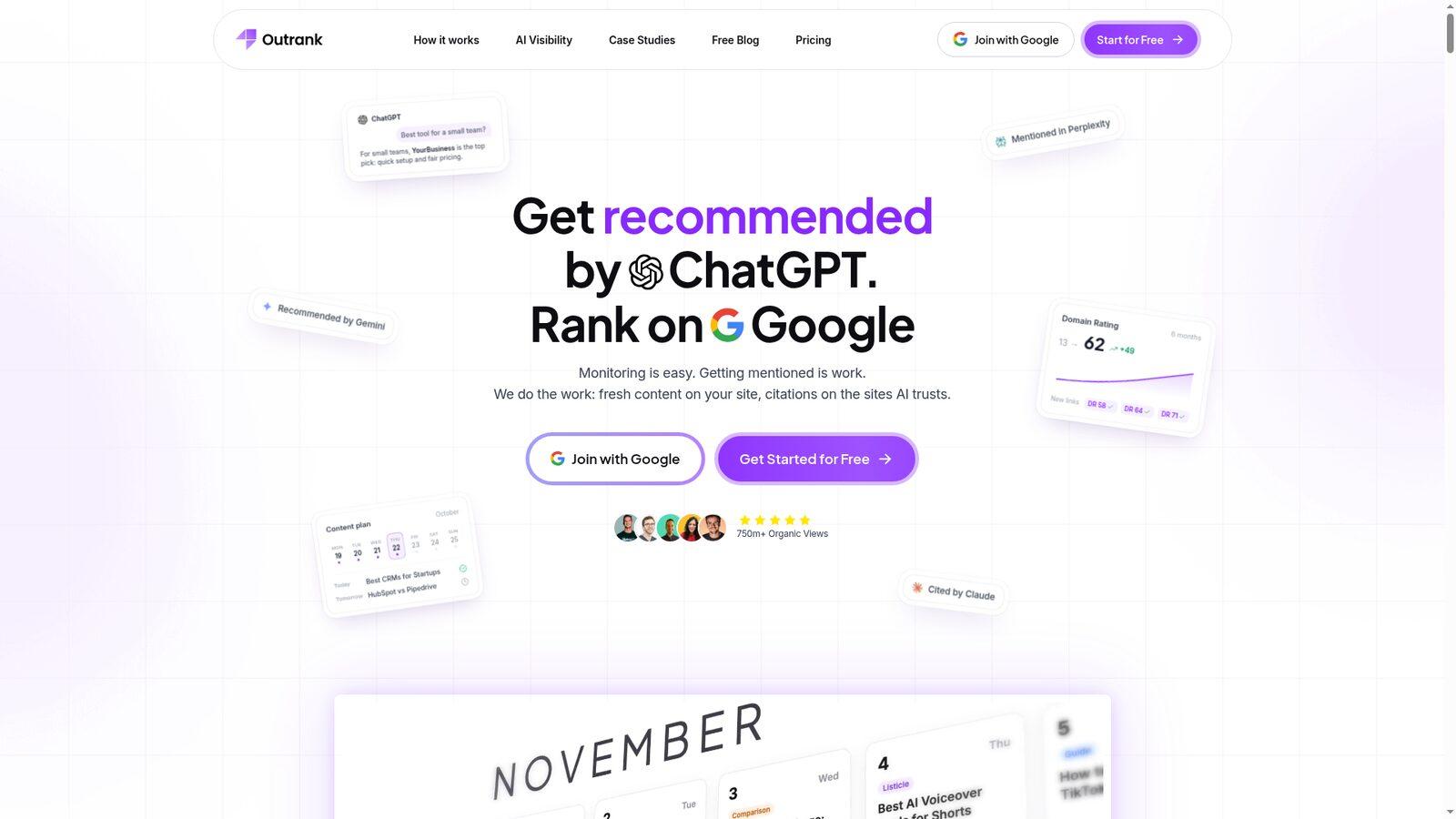
Outrank is published by Outrank SAS, a company based in Paris. The tool researches keywords, writes one article a day with images and embedded YouTube videos, then publishes it to WordPress, Webflow, Shopify, Framer, Wix, Ghost, Notion or Next.js. It also offers a free hosted blog for sites that have none. It writes in more than 150 languages.
Its offer is simple: $99 a month for 30 articles, no commitment, with a trial whose articles carry a watermark. Outrank claims more than 750,000 published articles. If you mainly want a blog that fills itself, it is the clearest offer on this list and, on monthly billing, the one with the most articles for the price.
Outrank stops at the blog: existing pages, service pages and the site’s technical issues stay on your plate. It offers an optional credit-based link exchange between users. As with any generator, review the articles to add your prices, lead times and customer stories.
8. Surfer, the editor that scores your content
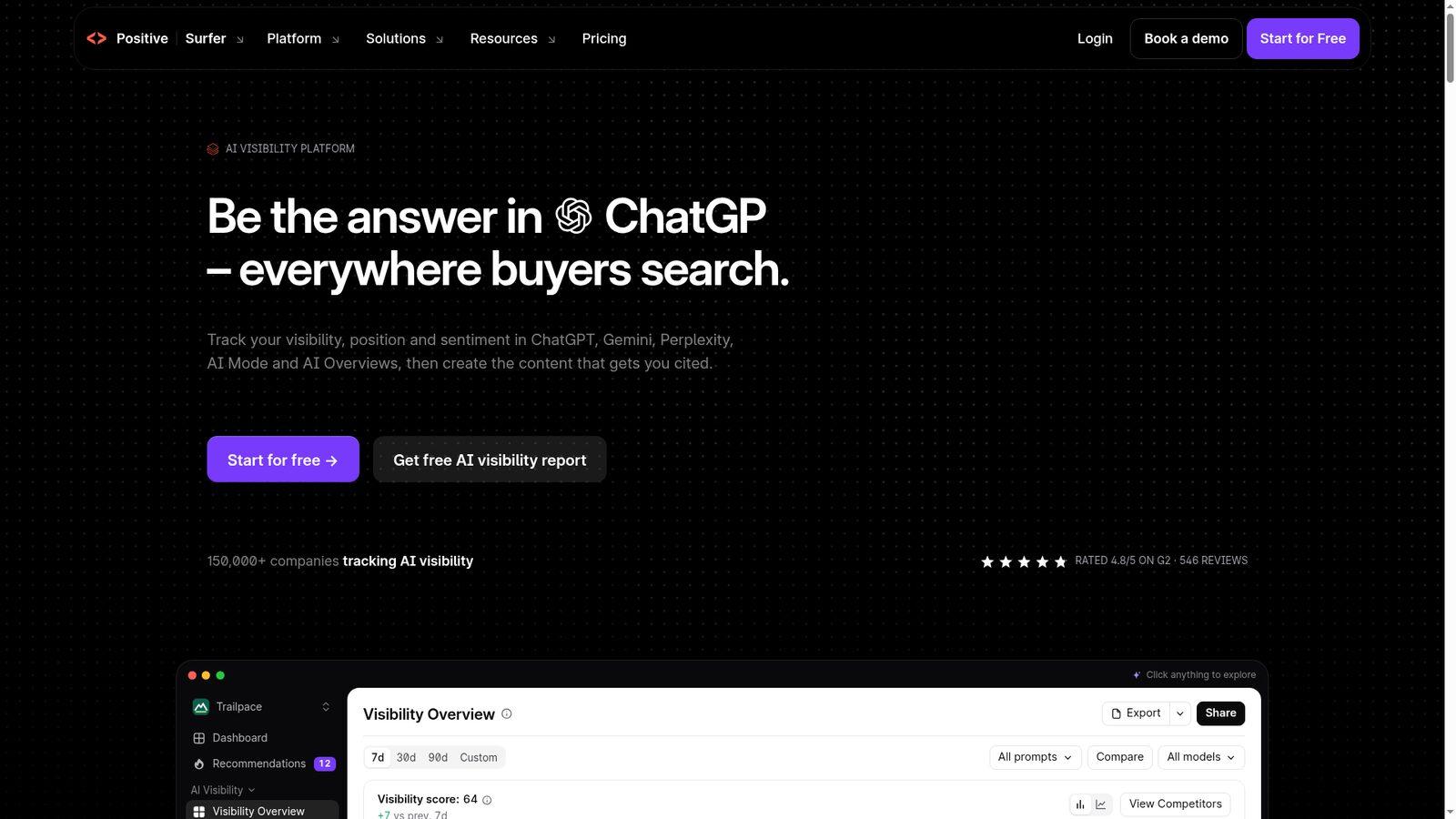
Surfer, a Polish company based in Wrocław, claims more than 150,000 brands and agencies as customers. Its content editor scores a text as you write it, against the best-ranking pages on the same topic. Its assistant Surfy drafts content. Surfer also tracks a brand’s visibility in ChatGPT, Gemini and Google’s AI Overviews, and exports texts to WordPress or Google Docs. It works in French.
Prices start at €49 a month billed yearly for the Discovery plan (120 documents), then €99 for Standard and €182 for Pro, on its euro price list. You can start for free before picking a plan. Surfer shows 4.8 out of 5 on G2 from 546 reviews and 4.9 on Capterra.
Surfer helps someone who already writes produce better pages. You still pick the pages to write, publish them and fix the site’s technical issues yourself.
9. Semrush, the reference SEO suite
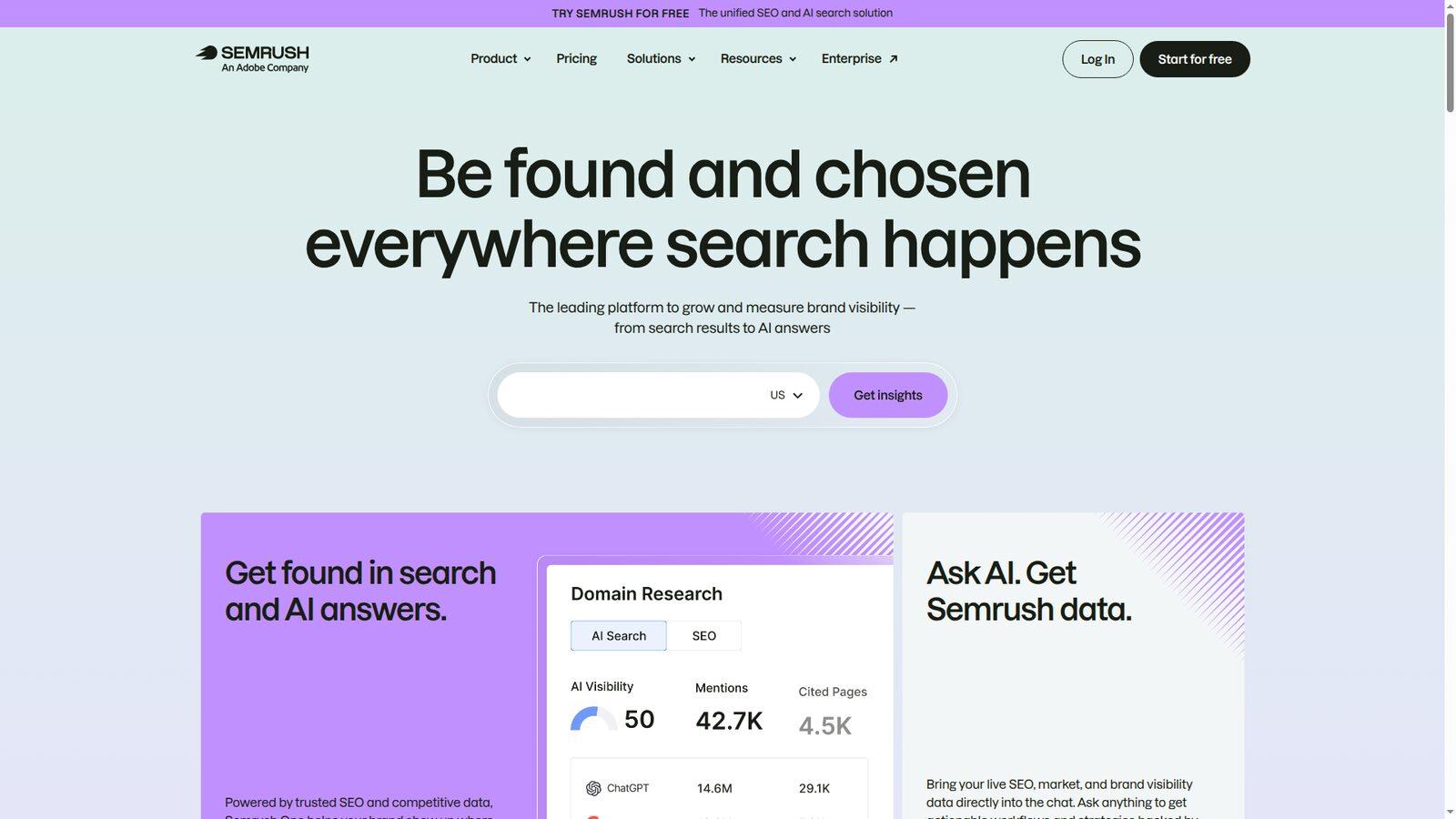
Semrush, acquired by Adobe in April 2026, is the best-known SEO suite. It covers keyword research, technical audits, rank tracking, competitor and backlink analysis, and visibility tracking in ChatGPT, Perplexity, Gemini and Google’s AI Overviews. Its Content Toolkit drafts articles.
The SEO plan costs $139 a month ($117.33 a month billed yearly). The plan that adds AI tracking, with 50 tracked questions, costs $199 a month. Semrush offers a free plan limited to 10 reports a day and a 7-day trial. The Content Toolkit costs $60 a month billed yearly. Semrush had 4.4 out of 5 on G2 from 3,973 reviews in June 2026.
Semrush draws on more data than any other tool to show what to do. Its Content Toolkit then drafts the articles, but someone still has to decide, review and publish.
10. Ahrefs, the specialists’ database
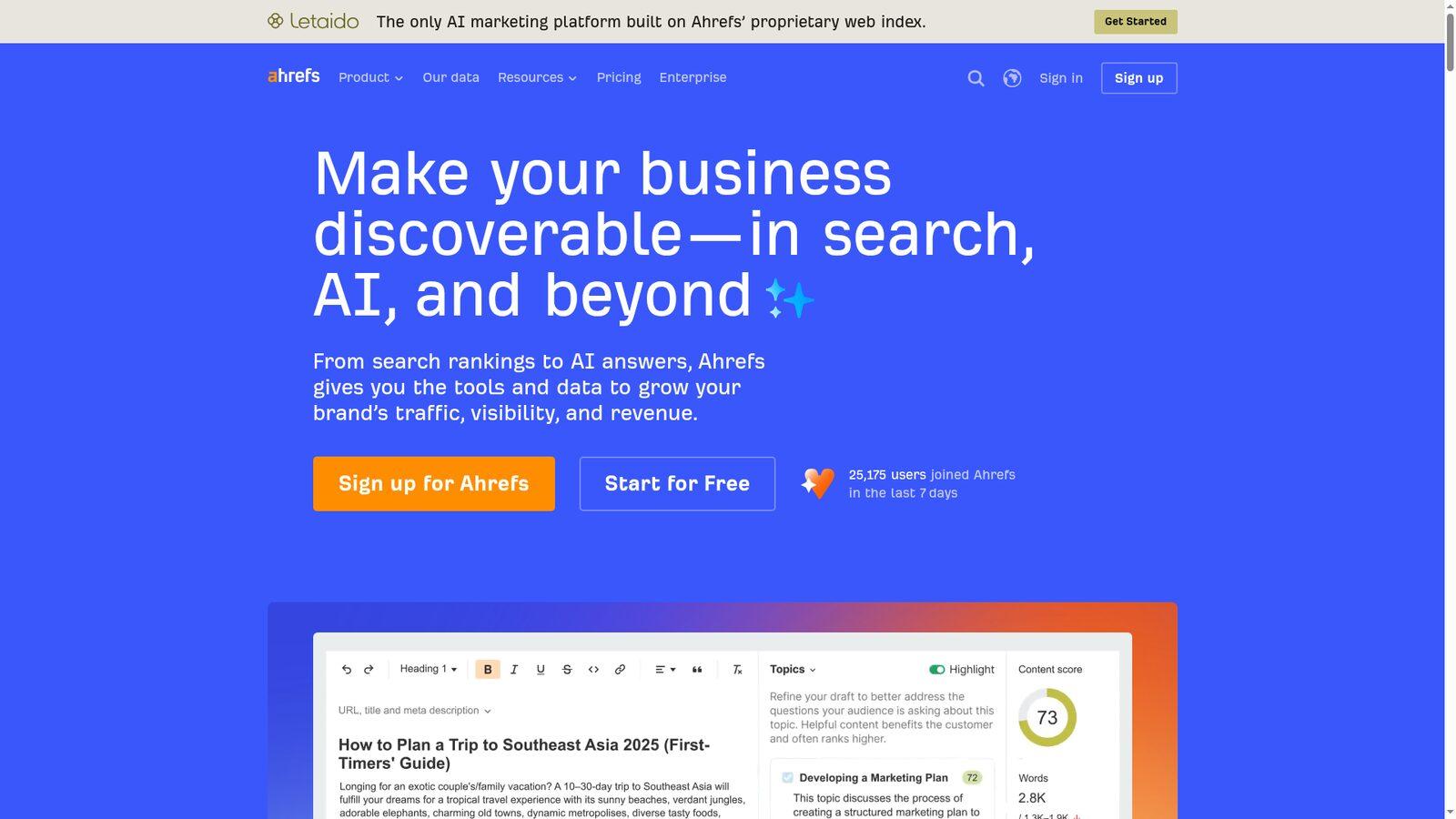
Ahrefs, a Singapore company founded about fifteen years ago, has no outside investors and employs 148 people. Its backlink index is the reference among SEO specialists. Ahrefs tracks rankings, audits sites and analyzes competitors. Its Brand Radar module also measures a brand’s presence in AI answers. Its writing assistant, AI Content Helper, scores a draft against the best-ranking pages, in more than 170 languages.
The Starter plan costs $29 a month. AI Content Helper and Brand Radar are paid add-ons on top of a plan. Ahrefs offers a free version to analyze your own site. It shows 4.5 out of 5 on G2 and 4.7 on Capterra.
Ahrefs has the best backlink data. Like Semrush, it leaves the work to someone who knows SEO.
How to choose between these tools
Start from the time someone can spend on SEO each week, then from what you expect:
- No one has time. Pick an agent that works across the whole site. Bibop suits a small business that wants everything done and measured for it, at a fixed price with no commitment. Bibop is in private beta: if you want to start today, Search Atlas and Sorank offer a trial. Search Atlas suits an agency managing several sites. Frase suits a team where someone can approve each article before it goes live.
- You mainly want a full blog, with someone to review the posts. Arvow, SEObot or Outrank publish fast for under $100 a month. Your service pages and technical issues still need handling elsewhere. Before you pick one, read about the risks of autoblogging and the right settings.
- You already write your content. Surfer will help it rank better.
- You have an SEO lead, or you want to learn. Semrush or Ahrefs have the most complete data. Start with their free versions and with Google Search Console, which is free too.
Is your site on WordPress or Webflow? Bibop connects to both with no plugin to install and handles SEO for your WordPress site or your Webflow site.
Before you pay, ask the vendor these questions, whatever the tool:
- Who picks the pages to write, and from what data?
- Can I start right away, and how do I get refunded if it doesn’t work for me?
- Do the results shown come from customers independent of the vendor?
- What happens to the published work if I cancel?
- Does the tool add links between its customers’ sites?
A link exchange between customers can push your site down in Google: Google’s spam policies count excessive link exchanges as link spam.
If you are still torn between a tool and a service provider, we compared an SEO agency, a freelance consultant and an AI tool on a small budget.
Your questions about AI SEO tools.
What is the best AI SEO tool for a small business?
For a small business with no one on SEO, the best tool is an agent that does the work across the whole site: Bibop, Search Atlas, Sorank or Frase. Bibop, in private beta with a waitlist, picks the month’s work, publishes the pages, fixes technical issues and measures the effect, for €90 a month$100 a month with no commitment. If someone on the team already handles SEO, Semrush or Ahrefs have the most complete data.
Can AI do SEO on its own?
Mostly, yes. An SEO agent picks the pages to write from your data, publishes them, updates existing pages and fixes technical issues. It cannot replace what only you know: your prices, your customer stories, the way you work. The best tools ask you for these details instead of making them up.
Can ChatGPT do SEO for my site?
ChatGPT writes what you ask for very well, but it does not read your Search Console, does not track your rankings and publishes nothing to your site. Someone still has to decide what to write, put it online and measure the result. We compare ChatGPT and an agent that works in your site in detail.
Is there a free SEO tool?
Yes. Google Search Console is free and shows your clicks, impressions and rankings in Google. Semrush has a free plan limited to 10 reports a day, and Ahrefs a free version for your own site. These tools give you the data, but someone still has to write and publish.
How much does an AI SEO tool cost?
In November 2026, article generators cost $39 to $99 a month, suites like Semrush $139 to $199, and agents’ entry plans range from $39 billed yearly at Frase to $99 at Search Atlas. Bibop costs €90$100 a month. Also count credits, paid add-ons and the time spent driving the tool. For comparison, an SEO agency costs $1,000 to $5,000 a month in the US, based on Ahrefs’s survey of SEO providers and US pricing guides.
Does Google penalize AI-written content?
Not for being written by AI. Google’s guidance on AI-generated content states that appropriate use of AI is not against the rules: Google judges how helpful the content is. Its scaled content abuse policy does target pages published in volume that add nothing for the reader. Review the articles and add your own facts.
Do I need a separate tool to get cited by ChatGPT and Perplexity?
Not necessarily. AI engines mostly cite pages that answer a question clearly, with dated and sourced facts. Bibop, Search Atlas, Sorank, Frase, Arvow, Surfer, Semrush and Ahrefs all track a brand’s presence in AI answers, included or as an add-on. We explain how to get cited in AI answers.
Can an AI tool replace an SEO agency?
For the site’s day-to-day work, an SEO agent does what an agency does: write, update, fix and measure. An agency remains the better fit to present a strategy to your leadership team, run PR, or handle a redesign of thousands of pages.
The right tool depends on who will do the work
The ten tools in this ranking are serious. Suites like Semrush and Ahrefs serve a specialist. Surfer helps people who already write. Arvow, SEObot and Outrank fill a blog. Frase, Sorank, Search Atlas and Bibop work inside the site itself, with more or less autonomy.
Bibop is built for a small business that does not want to drive anything: it picks the month’s work from your data, puts it live across the whole site and reports what it brings in, for €90 a month$100 a month. It is in private beta with no free trial, but the first month stays refundable for 30 days. Join the waitlist, see what the agent does every day, or go straight to pricing and guarantees.

